What is Screen-Printing? How does it work?
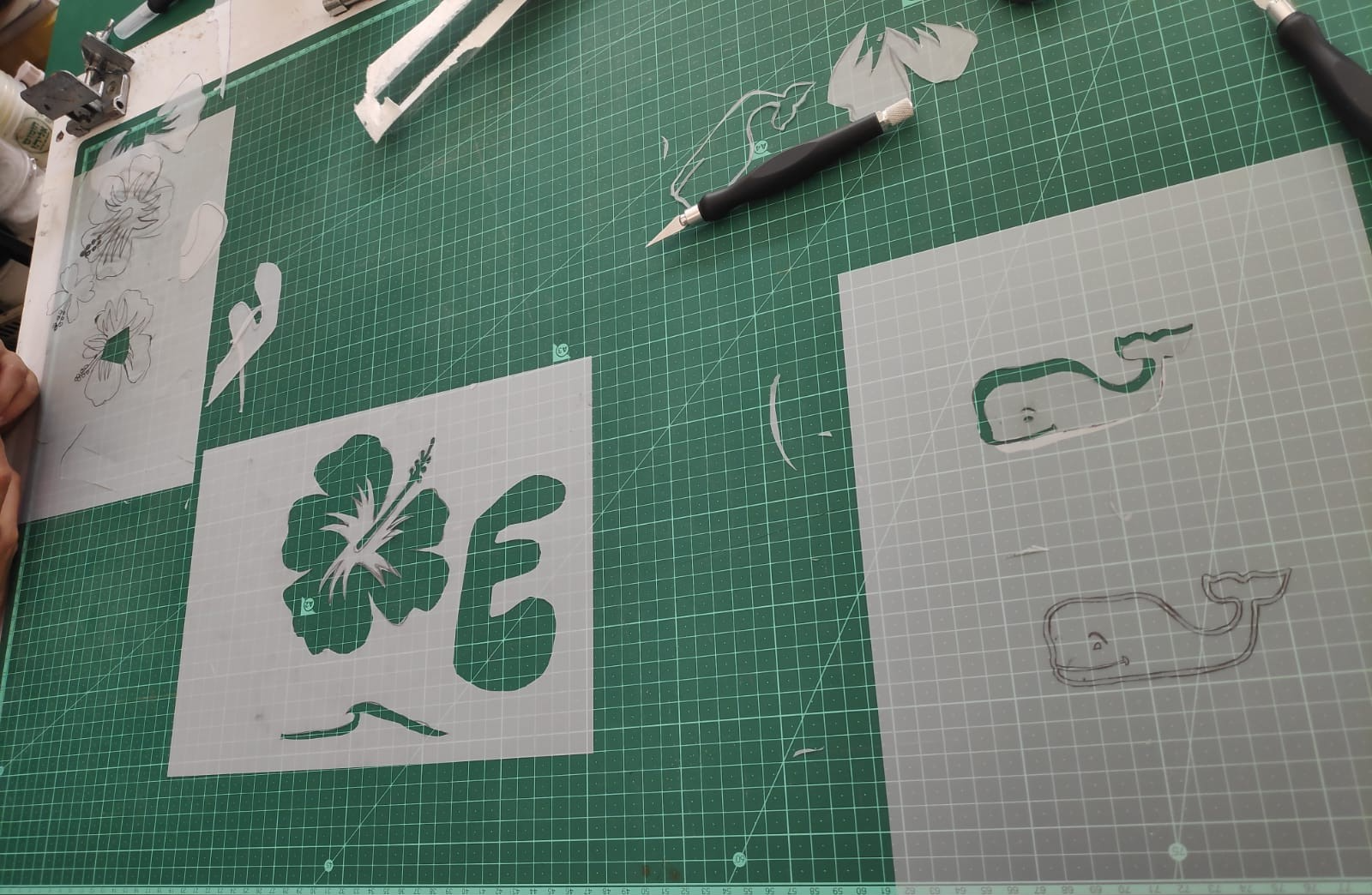
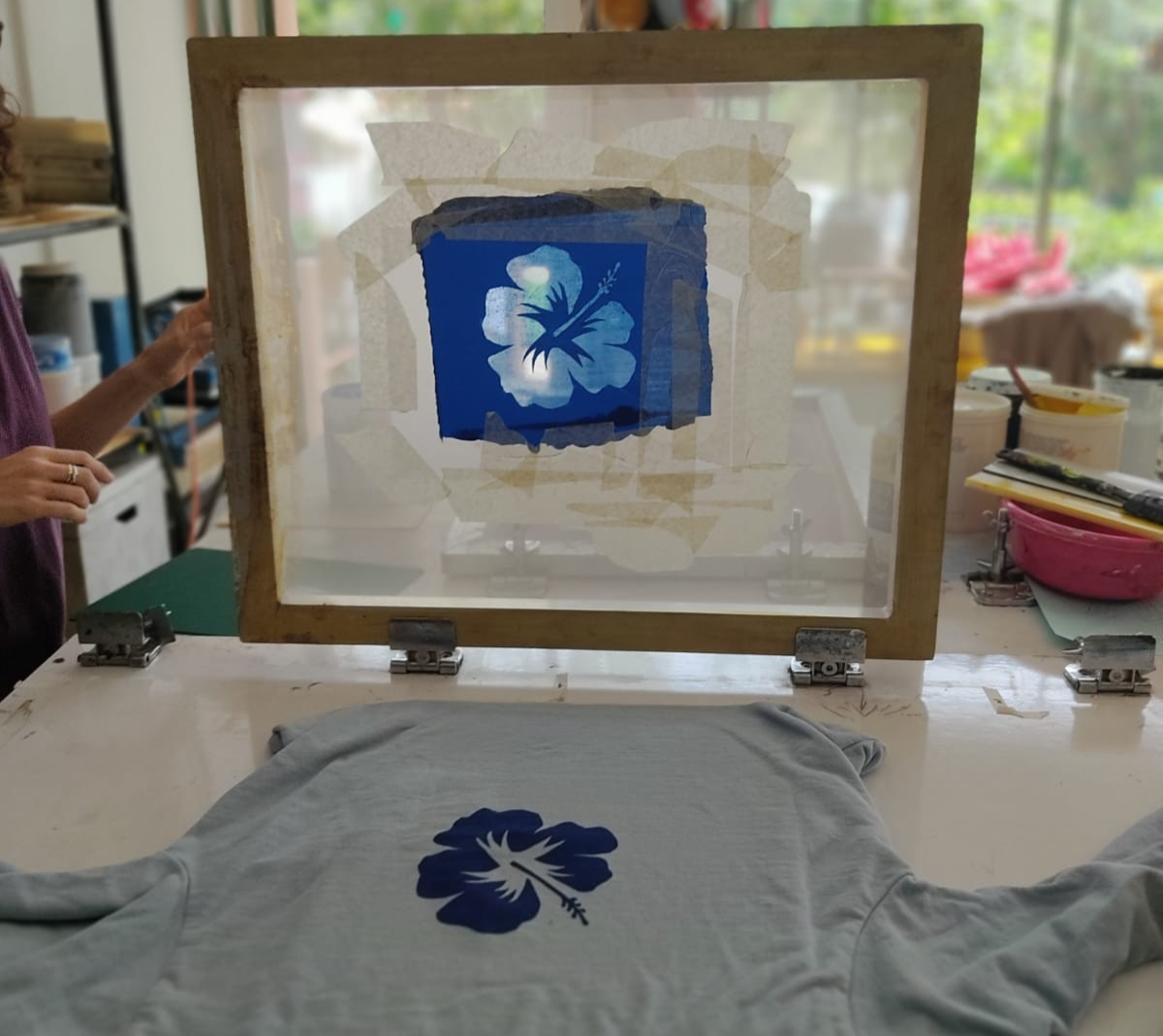
In the screen printing process, a stencil is first created by blocking certain parts of the mesh so that ink can pass only through the desired areas.
The prepared screen is then placed onto the surface to be printed, such as a T-shirt or poster. Ink is applied and pushed across the screen using a squeegee, which forces it through the open sections of the mesh onto the material beneath.
Finally, the printed item is dried or heat-cured to properly set and secure the ink.
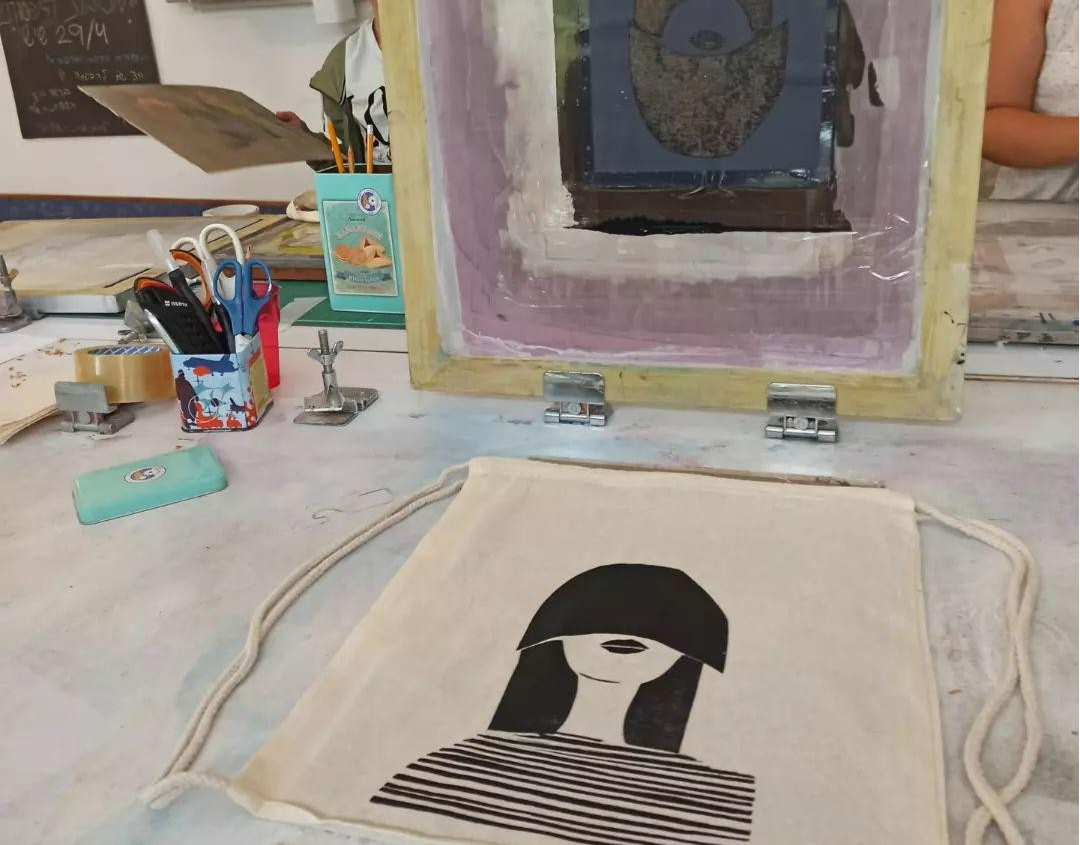
Screen printing, also known as silk screen printing, is an ancient printing technique based on a mesh fabric stretched tightly over a frame, on which the print design is created. In ancient times it was silk fabric, today we use polyester fabric.
The mesh is attached to a wooden or aluminium frame and the desired image is created on the mesh for printing.
Every color or tone in the printed design is assigned its own area on the mesh (if using 1 screen) or on different screens, and is printed separately. In screen printing, the design is built up in layers, with each layer representing a different color or different tone.
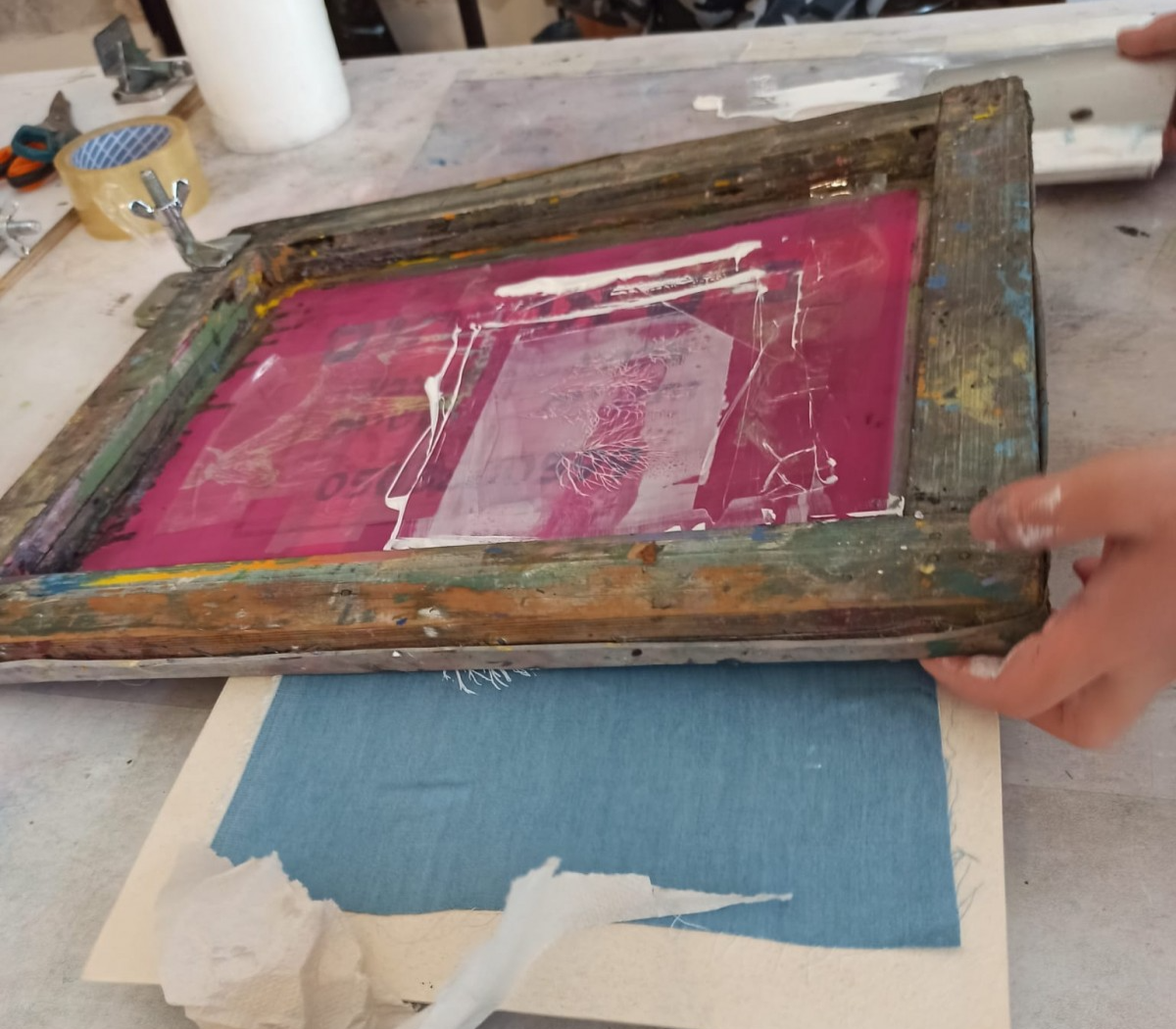
When it comes to printing with the screen, special screen-printing inks are used along with a dedicated squeegee that pushes the ink across the mesh.
The ink is suitable for printing on fabric and is resistant to washing, If it has been properly heat-cured.
If multiple-color layers are required, one color must be printed and allowed to dry before the next color can be applied.
What can you print with screen printing?
Screen printing is excellent for small-batch printing on fabric (both woven, natural and flat textiles), paper, wood, cardboard and cork.
In my studio, we print manually. This means that every pull of the squeegee carries a slightly different rhythm, pressure, amount of ink, and emotion. Each print turns out very similar — yet never identical — preserving a handmade quality that you can truly feel when looking at the final pieces.
For this reason, manual screen printing is perfect for those who are not afraid of small surprises ("Happy Accidents") and appreciate a human touch in their prints.
Screen printing generally is best to use with fewer tones and larger quantities. When choosing a one-color design, it is easy (and affordable) to produce a large number of prints.
Each additional color/layer doubles the work involved, and naturally, the printing cost increases accordingly.
The same applies to workshops where you print your own designs:
If you arrive with a one- or two-color image, you’ll be able to print on many of the materials or products you bring within a three-hour session — and leave with plenty of beautiful keepsakes.
Want to learn more about workshops at my studio?
Click here for information about printing workshops.
Want to talk with me, ask questions, or visit the studio?
Click here to call or message me on WhatsApp.